
Underfloor Heating Installation and Repair in Milton Keynes
Tell Us About the Job
Tell us about the job in two minutes and we’ll come back to you with a clear, fixed price.
Underfloor heating is common enough in Milton Keynes now that it is worth understanding properly. Most of the newer estates have it downstairs as standard, which means a large number of households own a heating system they have never had explained to them, controlled by a manifold in a cupboard they have never opened.
It is also a system where the faults are concentrated in one place. The pipework in the floor almost never fails. The manifold, the actuators and the controls fail regularly. That is good news, because it means most underfloor heating problems are fixable without touching the floor.
We install and repair underfloor heating across Milton Keynes and the surrounding towns, in homes, rental properties and commercial premises. Gas Safe registered, registration number 981362.
- Gas Safe registered 981362
- Fixed price agreed before we start
- Milton Keynes and 20 miles around
- 8am – 8pm, Mon to Sat
Last updated
How it works, and why it behaves differently
A wet underfloor system circulates warm water through pipe loops buried in the floor, turning the whole floor into a low temperature radiator.
Two consequences follow, and they explain most of what confuses people:
It runs at a much lower flow temperature than radiators.
Typically around 35 to 45°C rather than 55 to 75°C. That is why it suits condensing boilers and heat pumps well, since low return temperatures are exactly what makes a condensing boiler efficient. Part L now requires new wet systems to be designed to a maximum 55°C flow temperature, and underfloor was already there.
It is slow.
A floor with thermal mass takes hours to warm up and hours to cool down. Underfloor heating is not a system you turn on when you feel cold. It works best running steadily at a consistent setting, and it performs badly on a radiator-style schedule of short bursts.
If your underfloor heating never feels like it is doing much, the control strategy is worth looking at before anything else.
The manifold, where most faults live
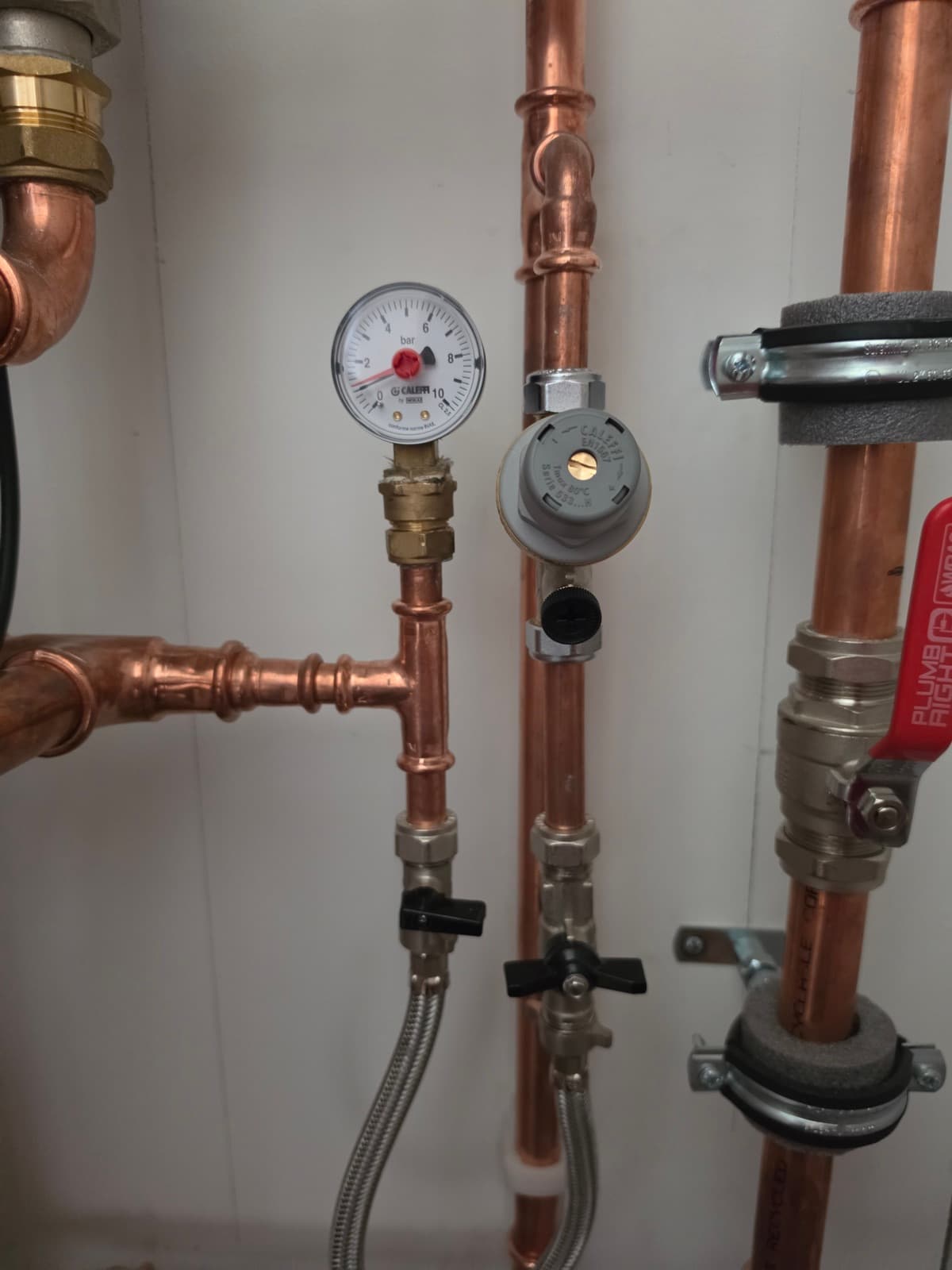
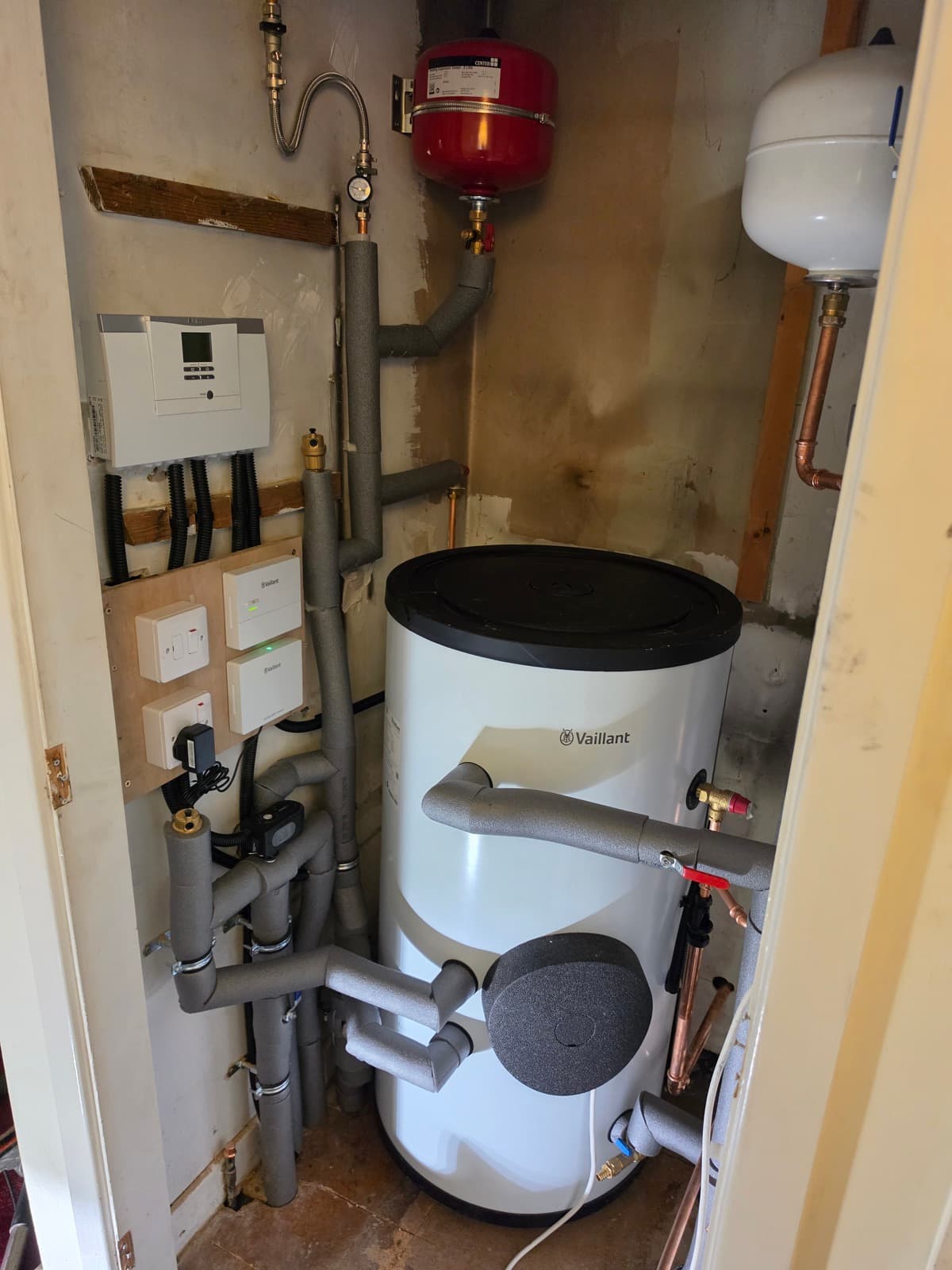
Open the cupboard. The manifold is where every loop starts and finishes, and it is where nearly everything that can fail is located.
Actuators.
Small electrical heads sitting on top of the manifold, one per zone, opening and closing that loop when the thermostat calls for heat. They fail, and when one fails closed, that zone goes cold while everything else works. This is the single most common underfloor fault and it is an inexpensive part.
The blending valve.
Mixes hot water from the boiler with returning water to hold the low flow temperature the floor needs. If it fails high, the floor gets too hot, which can damage floor coverings. If it fails low, the floor never gets warm enough.
Flow meters.
The small clear indicators on the manifold showing flow rate through each loop. They are how the system is balanced, and they tell you at a glance whether a loop is flowing at all.
The circulating pump.
Usually mounted on or near the manifold. Fails like any pump.
Wiring centre.
Where the thermostats, actuators and pump are wired together. Loose connections and failed thermostat batteries account for a fair share of “the underfloor has stopped working” calls.
Common faults and what they mean
One zone cold, the rest fine
Almost always a failed actuator, a thermostat with flat batteries, or a wiring centre issue. Check the flow meter for that loop: if there is no flow, the actuator is the first suspect.
All zones cold
Pump, blending valve, wiring centre, or a boiler that is not supplying the manifold. Check whether the manifold pipework is warm at all.
The floor warms up but the room never gets there
Usually a control strategy problem, sometimes floor covering. Thick carpet with high tog underlay insulates the floor from the room, which is exactly what you do not want. Floor coverings over underfloor heating should generally total no more than about 2.5 tog. Solid timber is problematic because it moves; engineered timber and tile are better suited.
Pressure loss
If the system pressure keeps dropping, water is escaping. It may be at the manifold, which is accessible, or in a loop in the floor, which is not. This is the fault worth diagnosing properly rather than topping up.
Finding a leak in a screed floor
This is the job people fear and it is more manageable than it sounds, because the manifold gives you a way in.
- 1
Isolate each loop at the manifold in turn and pressure test them individually. That identifies which loop is losing pressure, without touching the floor
- 2
Thermal imaging on the suspect loop. A hot leak warms a patch of screed in a pattern a camera reads
- 3
Acoustic detection where the leak is pressurised
- 4
Open only the identified area
The alternative, which we get called in to correct, is lifting screed based on where the damp appeared. Water travels through a floor before it surfaces, so the wet patch is frequently nowhere near the leak.
Our leak detection page covers the wider approach.
Underfloor heating in Milton Keynes: the local picture
Newer estates, Brooklands, Whitehouse, Fairfields, Oakgrove, Tattenhoe Park and Glebe Farm. Ground floor underfloor with radiators above is the standard build here. Most of these systems have never been serviced or balanced since handover, and a fair number have at least one failed actuator that the household has adapted around by simply not using that room much.
This is also the group where any floor work matters. If you are fitting a kitchen island, a wet room or anything requiring floor penetration, the underfloor pipe positions have to be established first. A drill through a heating loop in screed is an expensive afternoon.
1980s and 1990s estates, Furzton, Emerson Valley, Shenley Brook End and Loughton. Retrofit territory, usually low profile overlay systems in an extension or a refurbished kitchen rather than whole-house.
Older property in Stony Stratford, Newport Pagnell, Olney and Wolverton. Retrofits into solid floors during renovation. Insulation underneath the system matters enormously here, because without it a meaningful share of the heat goes into the ground.
Installing underfloor heating
In screed
is the standard for new build and for renovations where the floor is coming up anyway. Best performance, most thermal mass, most disruption to retrofit.
Low profile overlay
systems sit on top of an existing floor, adding a modest build-up. The right answer for most retrofits. The build-up affects door heights and thresholds, which needs checking before starting.
Either way, the things that decide whether it performs are insulation underneath, correct loop spacing for the room’s heat loss, and a control strategy that suits a slow system. Floor covering choice needs settling before installation rather than after, since it changes the design.
Before you install or repair
- Open the manifold cupboard and photograph it, including the flow meters, before calling anyone
- Check thermostat batteries in the affected zone first
- Note which zones work and which do not, since that narrows it immediately
- If retrofitting, decide floor coverings before design, and check the tog rating
- Check door heights against the build-up for overlay systems
- Confirm insulation below the system is specified, not assumed
- Before any floor drilling or cutting, establish where the loops run
- Ask for the system to be balanced at the flow meters, not just switched on
- Get the control strategy explained, because this system does not behave like radiators
Frequently asked questions
One room’s underfloor heating is cold. Is that expensive to fix?
Usually not. It is most often a failed actuator or a thermostat battery, both inexpensive.
Why does my underfloor heating take so long to warm up?
Because it is designed to. A floor with thermal mass responds in hours, not minutes. It works best held at a steady setting rather than switched on and off.
Can I put carpet over underfloor heating?
Yes, within limits. Floor coverings should generally total no more than around 2.5 tog including underlay. Thick underlay is what usually stops a system performing.
Can you find a leak in the screed without digging it all up?
Yes. Loops are pressure tested individually at the manifold to identify which one is losing water, then thermal imaging narrows the location before anything is opened.
Can underfloor heating be retrofitted?
Yes, usually with a low profile overlay system. The build-up affects door heights, so that gets checked first.
Does it work with a heat pump?
Very well, because it runs at low flow temperatures, which is exactly what a heat pump needs to be efficient.
My underfloor heating has never been serviced. Does it need it?
The manifold benefits from being checked and balanced, actuators tested and the blending valve verified. A lot of systems on the newer estates have never had this since handover.
Do you install underfloor heating in commercial premises?
Yes, for offices, shops and small commercial units.
You may also need
Open the cupboard and send us a photo
Call 07514 312117 or WhatsApp a picture of your manifold and we can often tell you what we are dealing with before we arrive. Gas Safe registered 981362, CIPHE member, fully insured.